






If you’ve been anywhere near a headline lately, you’d think AI has already rewritten the entire shopping playbook. But when we looked closer, we saw a different story. We surveyed more than 6,000 shoppers across the globe and analyzed aggregated traffic data from hundreds of retailers. Together, they reveal a more nuanced reality behind the hype.
Our latest 2026 Commerce & AI Trend Report explores the tension between rapid innovation and deeply rooted behavior. The result is a landscape that’s evolving fast, but not always in the ways you might expect.
Here’s a preview of what we learned.
Discovery happens everywhere. Checkout does not.
Shopping journeys have splintered into a thousand starting points. AI assistants, social feeds, streaming platforms, search engines, retailer apps. And yet, when it’s time to buy, shoppers still gravitate toward trusted retailers and brands.
Despite the rise of AI-powered discovery:
- Marketplaces and search still dominate where journeys begin
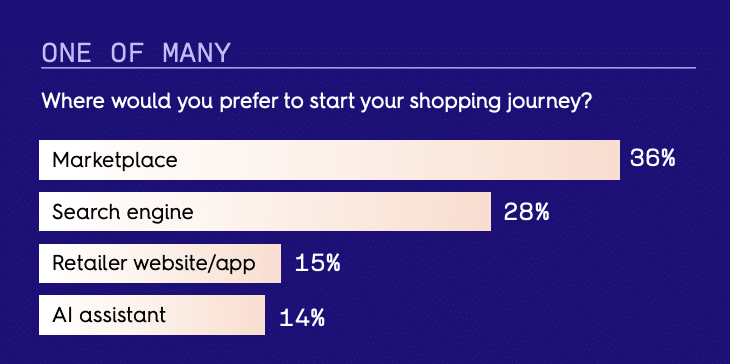
- AI assistants are entering the mix, but as one channel among many, not a replacement: 96% of shoppers who use AI shopping assistants regularly also use other channels along the way (search, social, brand websites, retailer websites, etc.)
- A majority of global consumers (55%) remain cautious about sharing sensitive data like payment details with AI assistants
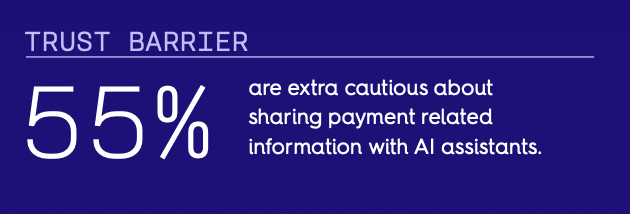
What it means: Brands need to show up everywhere discovery happens, but trust and conversion are still anchored in established retail environments.
Privacy matters. Trust matters even more.
As AI is changing discovery, it’s also introducing a new layer of skepticism. Consumers are navigating concerns about misleading or biased recommendations, uncertainty around data privacy, and a growing awareness of AI-generated content and potential fraud.
In fact, in our consumer survey, the top concern with AI-assisted shopping is being misled by fake/biased content (52%), followed by privacy (46%).

That said, shoppers aren’t rejecting AI. They’re just becoming more selective about who they trust within it. That puts pressure on brands and retailers to do more than just appear. They need to prove credibility, show transparency, and deliver consistently.
What it means: Brand equity isn’t just a differentiator anymore. It’s a safeguard.
Shoppers want a window, not a mirror.
Personalization shouldn’t mean predictability. In other words, relevance matters, but so does discovery. To push back against the over-personalization vacuum, shoppers are looking for retailers, brands, and AI assistants that can surprise them with intentional discovery.
- 56% of global shoppers want recommendations that go beyond exact matches
- They prefer a balance of familiar and unexpected
- They still value strong, recognizable brands
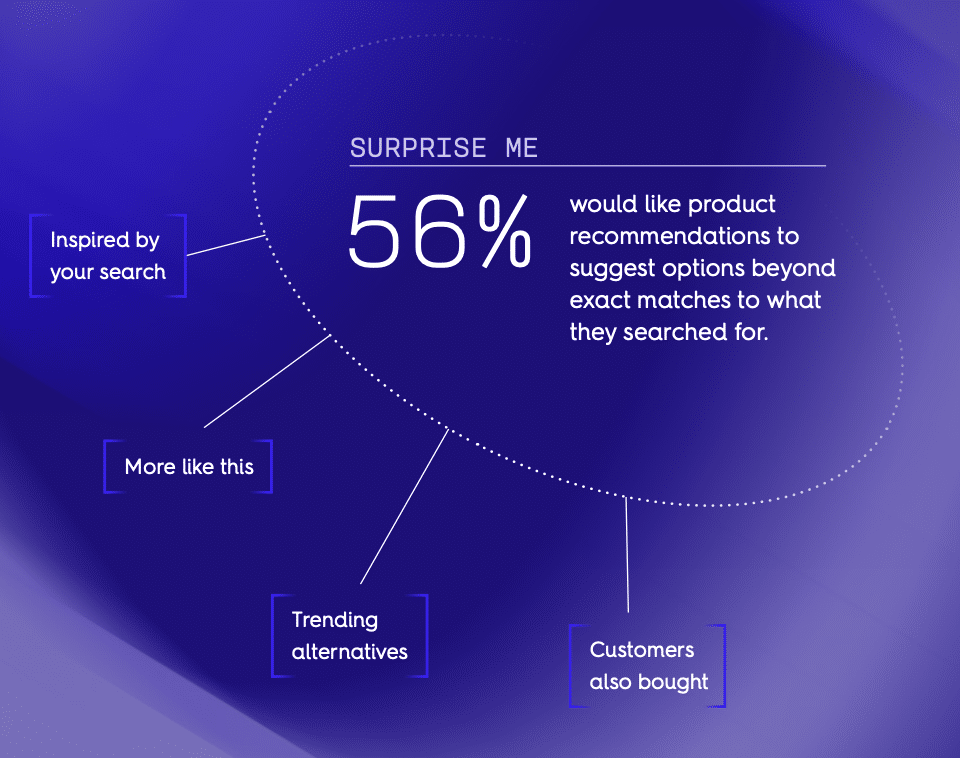
What it means: The next wave of personalization will evolve from “perfect personalization” to algorithmic serendipity.
Shopping is becoming a conversation (not a query)
The way people search is evolving from commands to conversations. Instead of typing “black dress size M,” shoppers are:
- Uploading screenshots
- Asking for “this vibe but under $100”
- Using voice while multitasking
- Framing needs as outcomes, not products: “Help me host a dinner party.” “Help me redesign my living room.”
In other words, shopping is becoming more show and tell. And consumers are starting to embrace it:
- Nearly half (44%) are comfortable using image-based search
- A quarter are comfortable using voice search
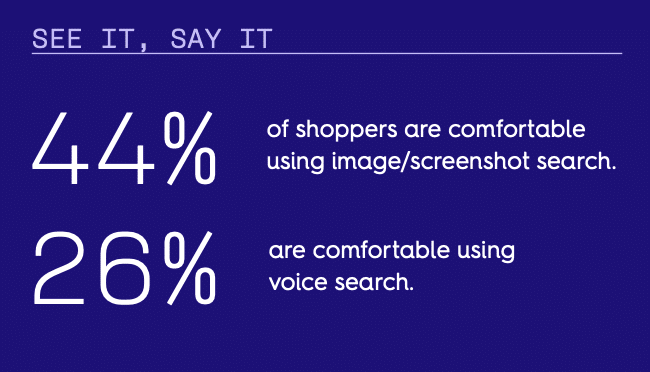
What it means: Winning brands will do more than match keywords. They’ll solve problems by understanding natural language and context.
AI is growing commerce, not cannibalizing it
One of the biggest questions around AI has been whether it will disrupt ecommerce as we know it. So far, the answer is simple: it’s expanding it.
AI is:
- Lowering friction in the shopping journey
- Bringing net new shoppers into the funnel
- Bringing high-intent visitors to retailers
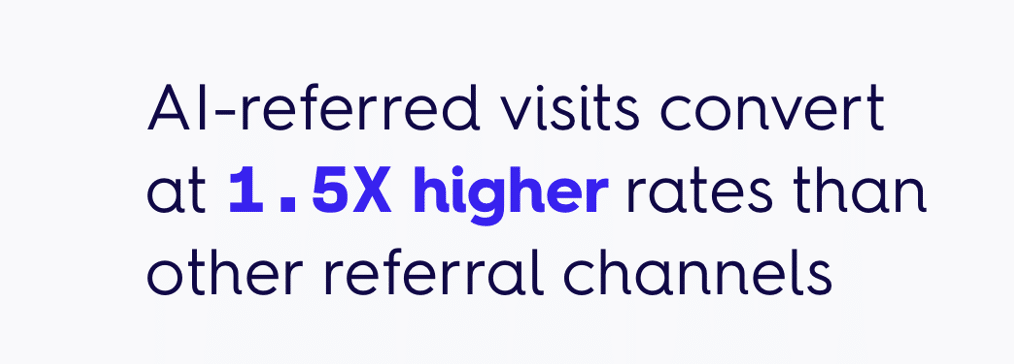
What it means: AI will bring more shoppers online and more opportunities to connect.
Want the full picture?
In the full 2026 Commerce & AI Trend Report, we go deeper into the global data behind these shifts and explore what’s coming next in AI-driven commerce.
Download the full report to explore all the trends, data, and implications.
Learn how Criteo is helping advance advertising in new AI experiences by being the first ad tech partner to join OpenAI’s advertising pilot in ChatGPT.