





Vacations are among the largest discretionary purchases many consumers make each year. But unlike everyday retail purchases, a trip is rarely planned in a single browsing session. The decision unfolds across destinations, providers, prices, schedules, travel content, and reviews.
That journey gives marketers a powerful window into consumer intent.
According to Criteo’s Spring/Summer 2026 Travel Pulse, the path from first product-page view to booking can take up to 36 days, while hotel bookings can take up to 39 days. Trips over a week long even saw searches last up to 86 days.
This level of sustained engagement is rare. It signals active consideration around one of the most meaningful purchases a consumer may make all year.
Travel planning happens across a fragmented journey
Travelers move across a growing mix of touchpoints as they plan. They may find inspiration through connected TV or social video, compare providers on a laptop, read reviews on a phone, and return to a travel site when they are ready to book.
AI is also becoming part of this process. Globally, 40% of travelers surveyed by Criteo said they would find AI useful for destination ideas, while another 40% cited accommodation recommendations.
Each interaction brings the traveler’s needs into sharper focus. A destination search may reveal their preferred climate. A hotel comparison can suggest their budget or trip type. Activity research may indicate who they are traveling with and the kind of experience they value.
For marketers, the opportunity is to interpret these signals together. A single interaction may offer limited context, but a pattern of observed behaviors can reveal where someone is in the planning process, what they are considering, and what they may need next.
Criteo has long helped marketers turn commerce behavior into measurable outcomes. As commerce media expands beyond traditional retail transactions, that expertise can help brands understand and act on the complex purchase journeys surrounding travel.
Travel is a catalyst for downstream purchases
A flight search, hotel comparison, cruise inquiry, or vacation package review may not look like a retail transaction, but it is an important commerce signal. It can reveal timing, preferences, spending capacity, household needs, and future purchase potential.
The booking itself may be only the beginning. Expedia Group Advertising found that 62% of travelers made a non-travel purchase tied to their most recent major leisure trip.
- A family planning a beach vacation might soon need swimwear, sunscreen, luggage, snacks, and children’s entertainment. Someone preparing for a ski trip may begin shopping for outerwear, goggles, sporting equipment, and cold-weather skincare.
- A business traveler booking an international flight may begin researching premium luggage, airport lounge access, noise-canceling headphones, roaming plans, wrinkle-resistant apparel, or travel rewards credit cards.
- Even a last-minute weekend getaway can create immediate demand for same-day delivery of toiletries, portable chargers, carry-on essentials, snacks, beauty products, or personal care items.
Travel behavior also reveals broader lifestyle preferences and spending patterns.
- Someone researching luxury resorts may be more receptive to premium beauty, apparel, dining, or financial services.
- Frequent international travelers might need roaming plans, lounge access, travel insurance, or rewards cards.
- Adventure travelers may be interested in outdoor equipment, action cameras, wellness products, and specialized apparel.
These connections make travel intent especially valuable. Instead of relying solely on demographics or assumed interests, marketers can use observed behavior to engage consumers during an active period of planning and spending.
More ways to activate Travel Audiences with Criteo
Last year, Criteo introduced Travel Audiences to help advertisers reach travelers based on observed booking, browsing, and commerce signals.
Now, marketers have even more ways to put those audiences to work.
Travel Audiences are available for direct activation in Commerce Growth and through curated deals in buyers’ existing DSP workflows via Commerce Grid, Index Exchange, Magnite, and PubMatic which connect with more than 60 third-party DSPs. This flexibility allows travel and non-travel brands to incorporate travel intent into their performance media strategies using the buying environment that best fits their needs.
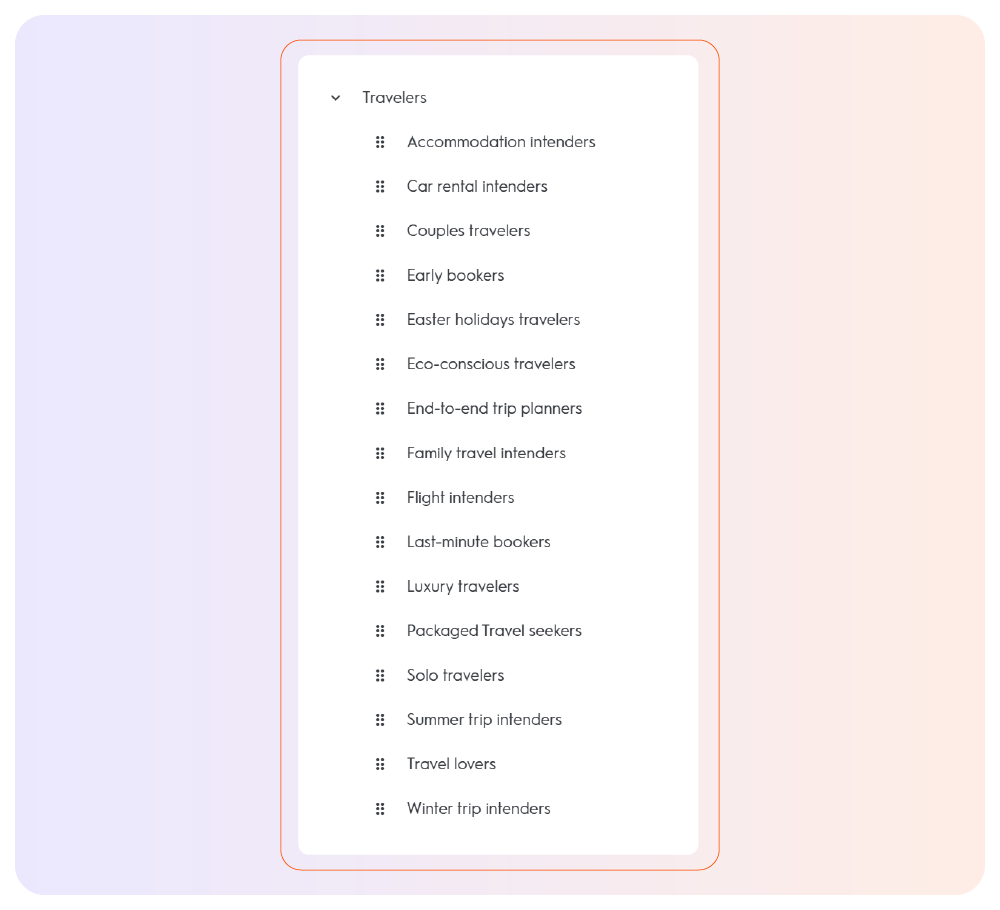
Within Commerce Growth, marketers can select from traveler segments reflecting intent, booking behavior, and trip type.
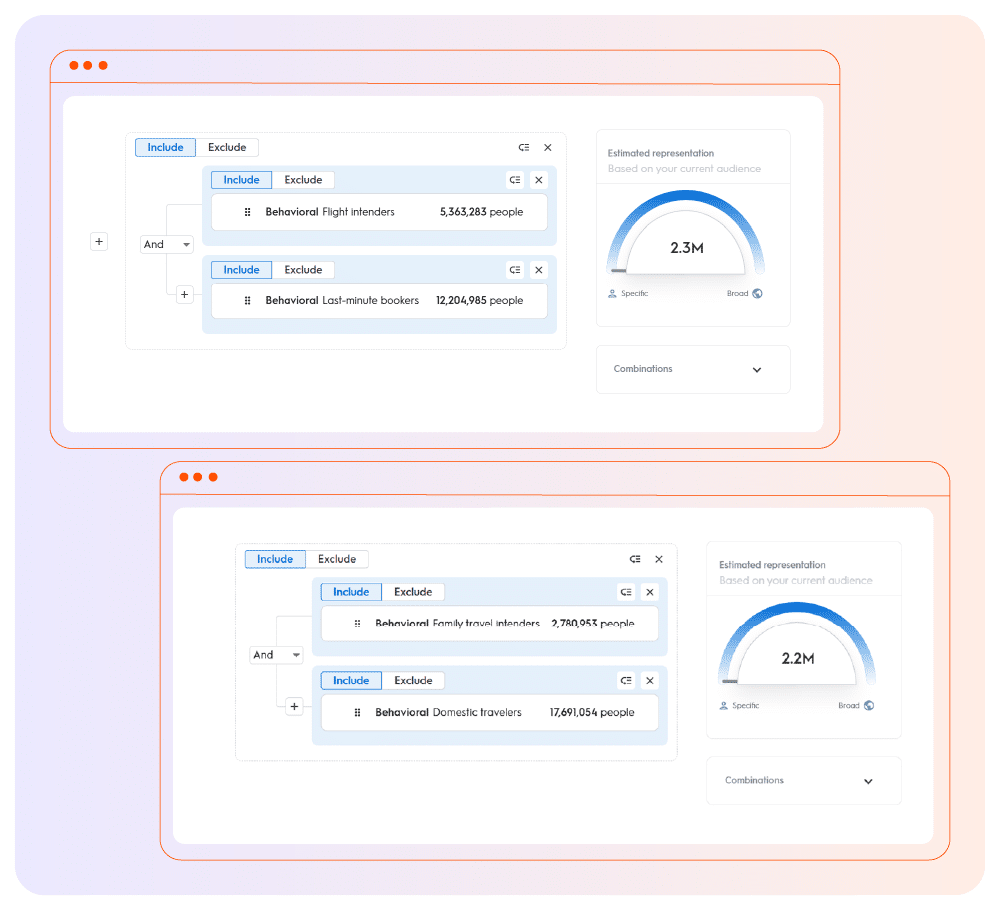
Traveler segments can reflect solo travelers, couples planning romantic escapes, families coordinating school-break vacations, business travelers extending work trips into leisure experiences, and much more.
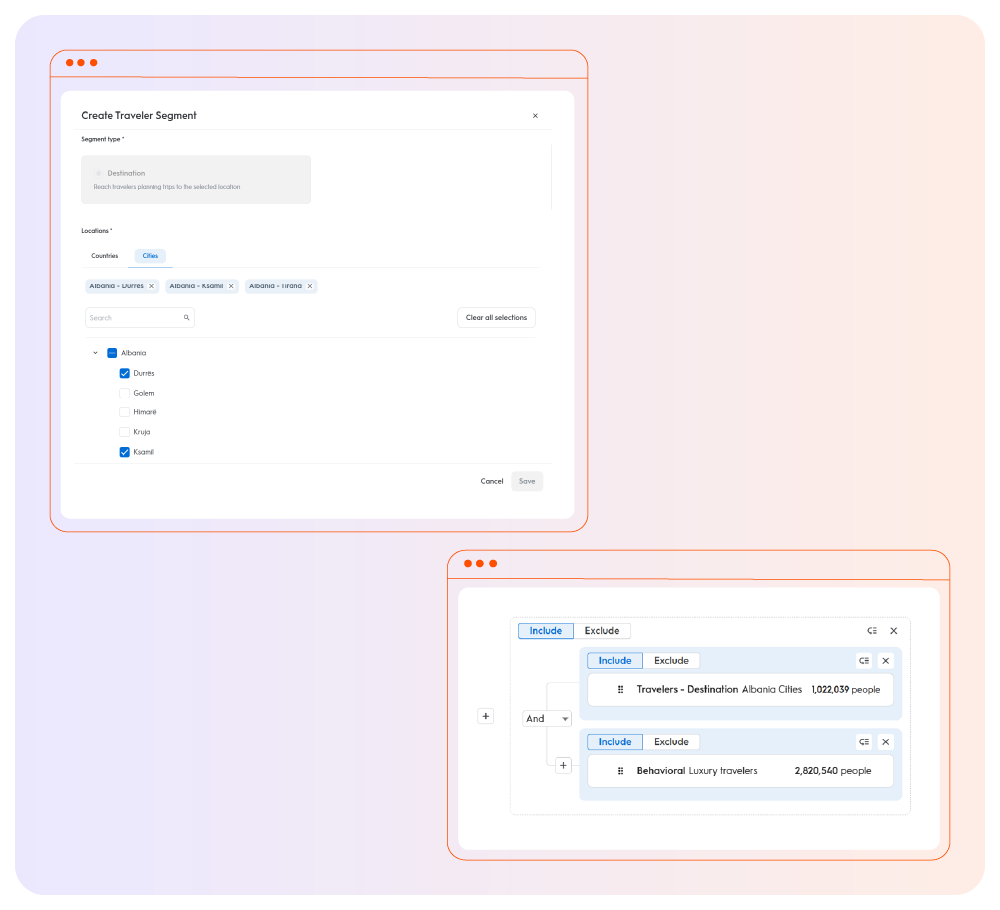
New destination segments add even more precision, allowing brands to build customized segments from a departure location to a destination. That can be either country to country or country to city, perfect for tourism boards, local attractions, hotels, and airlines.
This is where Criteo’s commerce media advantage becomes meaningful.
Criteo helps marketers activate high-intent commerce signals across the open internet, connecting advertisers with consumers in moments that matter. Our platform is built to understand consumer behavior across a broad commerce ecosystem and turn those signals into actionable audiences, personalized advertising, and measurable outcomes.
With Travel Audiences, marketers can bring travel intent into that broader commerce environment, using real-time behavioral signals to engage consumers whose travel plans may indicate immediate and future purchase needs.
What Travel Audiences mean for travel marketers
For travel advertisers, Travel Audiences create more opportunities to engage consumers during high-intent planning windows, when research activity and booking consideration peak.
- Airlines can reach people comparing specific routes, such as travelers in the US looking for flights to Paris.
- Hotels can engage people evaluating accommodations for specific trip types.
- Cruise lines can connect with travelers showing interest in multi-destination experiences.
- Rental car brands can reach people planning road trips or arriving in destinations where ground transportation will be important.
Destination marketers can also influence travelers before their plans are fixed. Many consumers begin with a general idea (e.g. a family trip, romantic weekend, once-in-a-lifetime experience) without having selected a destination or provider.
These early moments offer travel brands an opportunity to do more than capture existing demand. Relevant advertising can help shape the decision by providing the inspiration, confidence, value, or convenience travelers need to move forward.
Travel brands have already used Criteo solutions to connect with travelers and drive performance:
- SNCF Connect | Criteo Success Story
- ITAKA | Criteo Success Story
- Costa Cruzeiros | Criteo Success Story
What Travel Audiences mean for marketers beyond travel
For retailers and commerce marketers, Travel Audiences provide a way to reach consumers who are already preparing to spend. The opportunity spans categories.
According to Expedia Group Advertising, among travelers who made a trip-related non-travel purchase, 70% bought clothing, shoes, or accessories before their trip, while 63% purchased beauty and personal care products and 39% purchased electronics or new technology.
Someone in New York researching a Caribbean cruise in January may soon be shopping for warm-weather apparel, sunscreen, sandals, or luggage. A traveler planning a long-haul international vacation months in advance might be considering language apps, roaming plans, or travel-size beauty products.
The opportunity extends well beyond traditional travel essentials:
- Financial services brands can engage international travelers with messaging about rewards cards, travel insurance, lounge access, or products without foreign transaction fees.
- Quick-service restaurant and delivery brands can connect with travelers navigating unfamiliar destinations or preparing for road trips.
- Beauty and wellness brands can reach customers preparing for vacations, destination weddings, events, and seasonal travel.
- CPG brands can connect with families stocking up for road trips, beach vacations, or school-break travel.
- Apparel brands can tailor messaging to a traveler’s destination, climate, planned activities, or trip type.
- Streaming services and entertainment brands can engage travelers preparing for long flights, hotel downtime, or family trips.
- Telecommunications brands can reach international travelers with roaming plans, device upgrades, or other connectivity offers.
One booking decision can trigger dozens of commerce moments, and Travel Audiences help marketers act on the intent behind them.
Bringing travel intent Into commerce media
Travel planning combines sustained research, emotional engagement, and elevated discretionary spending. That makes it one of the clearest indicators of what consumers may value, need, and purchase next.
Travel Audiences help marketers act on those signals throughout the broader journey—from inspiration and planning to booking and pre-trip purchases. They allow brands to move beyond broad assumptions and build strategies around observed indicators of timing, preference, and need.
Criteo brings together travel and commerce signals with AI-driven optimization, cross-channel activation, and performance measurement. This connected view helps marketers reach consumers in meaningful moments while turning travel intent into measurable action.
Because where someone is going can reveal a great deal about what they will need next. Explore Criteo’s latest travel insights or contact the Criteo Travel team to learn how Travel Audiences can support your next campaign.
Sources:
Organic Criteo Data. Flight, hotel and tour packages bookings during Apr 1-14, 2026. Global.
Criteo Survey – Consumer Travel Preferences, February 2026 (N=6379), Global.
Expedia Group Advertising, Cart bound: How brands can turn travelers into customers, February 24-25, 2026 (N=2,166), U.S., UK, Canada, France, Japan, Mexico, Australia.