




Much of the discussion around AI in commerce has focused on the interface layer: shopping assistants, conversational discovery, and AI-powered recommendations. And for good reason. AI is evolving how shoppers discover products and setting new expectations for relevance. At the same time, an equally consequential shift may be happening beneath the surface in how marketers plan, optimize, and execute their advertising.
For years, retail media platforms have been built around human operations. Marketers logged into dashboards, interpreted retailer-specific reporting, and manually optimized campaigns across fragmented systems. That operating model is beginning to evolve for AI-driven environments.
As intelligent agents take on a bigger role in retail media, the next competitive advantage will come from building retail media systems that are easier for both humans and AI agents to operate versus simply layering AI features onto legacy tools.
Our belief at Criteo, is that retail media’s next chapter will reward companies building more standardized, interoperable, and AI-ready infrastructure. And that shift is already underway.
Retail media’s next challenge is operational
Most of the retail media industry still operates through disconnected workflows. Brands and agencies often navigate multiple retailer platforms, each with different reporting logic, measurement standards, and operational processes. While that’s long been a source of inefficiency for human operators, it becomes an even bigger limitation in an AI-assisted environment.
AI agents don’t work well inside fragmented systems that depend on manual intervention. They struggle when workflows are disjointed, data structures are inconsistent, and optimization processes vary from retailer to retailer. That’s why the underlying operating model is being redesigned for more unified activation, so that optimization becomes more portable, and execution becomes easier to scale.
For brands, this means standardization is becoming essential to make platforms easier to navigate and execute efficiently across retailers.
Interoperability becomes a competitive advantage
As AI becomes more embedded into commerce workflows, brands will need more normalized access to targeting, optimization, measurement, and insights across the places they sell. AI is powerful, but it delivers the greatest value when it’s built on a clear, consistent foundation. When retailers have different optimization levers or metrics that share the same names but carry different underlying definitions, brands need technology that can simplify that complexity and create the context that AI needs to be effective. That’s where interoperability becomes increasingly important as brands want to execute across retailers without losing transparency, control, or the ability to compare performance consistently across environments.
This is where Criteo’s continued investment in expanding Commerce Max matters. Now live, Commerce Max now extends beyond Criteo-sold media to include retailer-sold campaigns and budgets, giving brands a more unified way to manage and measure retail media across both environments. By helping normalize technical differences across retailers, Commerce Max creates the conditions for AI to be more useful, more reliable, and more actionable for the people using it. It helps teams spend less time navigating inconsistency and more time using insights and automation to move faster against their goals.
The importance of this approach is increasingly being recognized across the industry. In its Q2 2026 SPARK Matrix™ for Retail Media Network and Monetization Platforms, QKS Group named Criteo a leader and positioned our company highest overall in the report, citing strengths in our unified approach to activation, monetization, and measurement. This reflects the industry’s shift toward more connected, interoperable, and AI-ready retail media infrastructure.
The value of this approach extends well beyond industry recognition. It helps brands work more consistently across retailers, with more standardized reporting, richer insights, and flexible activation. The goal is to reduce operational fragmentation, so execution becomes easier to scale across retailers and more ready for AI-assisted planning and optimization.
The future of retail media will be shaped by platforms that connect activation across the broader commerce landscape as well as create consistency and interoperability that help AI, and the people using it, perform at their best.
Conversational commerce raises the stakes for relevance
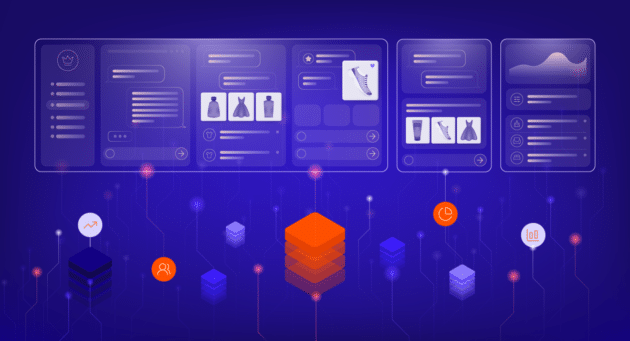
At the same time, the commerce experience itself is changing. Discovery is moving beyond a world defined entirely by search boxes, filters, and clicks. Shopping is becoming more conversational, contextual, and recommendation-led to unlock new opportunities for retail media. For Criteo, that includes sponsored products appearing within retailer chatbots, where relevant brand placements can become part of the conversation and influence decisions in real time, while creating incremental monetization opportunities for retailers.
In a traditional search environment, shoppers may scroll through dozens of product listings before making a decision. In conversational commerce, there may only be a handful of recommendations surfaced by an assistant. That increases the value of every placement and raises the stakes for relevance.
Product detail pages are becoming the new homepage
As AI platforms take on more of the discovery and evaluation process upstream, more shoppers land directly on the product detail page (PDP) with intent already shaped. This creates an opportunity for the PDP to become one of the most valuable places to engage high-intent shoppers, reinforce confidence, and monetize demand.
That means retailers can optimize the PDP to be more than a product information hub and serve as a new type of homepage to validate relevance and move shoppers toward conversion. To encourage shoppers through the journey, retailers can create dynamic experiences with a balance between sponsored and organic outcomes to recommendations, video, basket-building opportunities, and potentially conquesting placements where appropriate.
The systems behind those experiences need to make better decisions in real time about shopper intent, monetization, merchandising priorities, and commercial outcomes. As commerce becomes more conversational and context-rich, retailers will need systems that can interpret intent more dynamically and make better decisions in real time. Retailers will need more dynamic ways to balance shopper experience with advertising performance as commerce experiences become more compressed and recommendation-driven.
That’s where an AI decisioning layer can maximize relevance. Criteo’s Page Intelligence, designed to help retailers optimize what appears across the page, including how sponsored and organic outcomes work together, uses signals such as context, shopper behavior, product relevance, and commercial priorities to analyze how each element can be shown to drive the best outcome for the shopper, the retailer, and the brand.
That means a better experience for shoppers, with more useful results, while also helping retailers improve monetization, make stronger use of valuable page real estate, and drive better performance across both sponsored and organic outcomes. This creates an opportunity for retailers to rely on systems that can interpret context and intent more dynamically, leading to better experiences and stronger performance.
AI is shaping the shopping journey
Commerce is moving toward an AI-assisted future, rather than a fully autonomous one. AI assistants, retailer chatbots, and conversational ads will become more prevalent, helping reaccelerate ecommerce by making discovery more intuitive, expanding digital entry points, and generating more qualified shopping demand, while retailers continue to own the transaction, the customer relationship, and the fulfillment experience.
According to Bain and Company, shoppers trust retailers’ specialized, on-site assistants three times more than third-party, general assistants. Shoppers may start their journey in an AI platform, but they will still want to complete purchases in trusted retailer environments, which is why retailer-owned AI experiences and sponsored products in AI assistants will become a more important part of the mix.
Full autonomous commerce remains a pipe dream. Brands will still need to build trust, shape discoverability, and communicate value clearly across a more fragmented consumer journey. And as AI-assisted decisions influence more of the commerce journey, from how products are surfaced to how campaigns are optimized, relevance is determined, and outcomes are measured, the infrastructure requirements of retail media will evolve in an intentional way.
Preparing brands and retailers for what comes next
Retail media is entering a new phase, with new opportunities from infrastructure to consumer experiences. The industry is moving from workflows designed around manual operation to systems increasingly shaped by intelligent agents, conversational discovery, and real-time decisioning.
The next leaders will need to take a two-pronged approach and not simply have the best interface or the most visible AI assistant. They will need to build the infrastructure that makes retail media easier to activate, easier to optimize, and easier to scale across a fragmented commerce ecosystem.
At Criteo, we are at the forefront of these changes with investments in Commerce Max, Page Intelligence, Sponsored Products in retailer chatbots, and the relevance and decisioning capabilities needed to make AI-driven shopping more effective. Because in the next era of commerce, retail media’s future will be shaped as much by AI-driven infrastructure as by AI experiences.