





Despite ongoing economic pressure and global uncertainty, travel demand continues to grow. Travelers are still planning trips and ready to spend, but how they book has changed.
Today’s travel journey is more complex and more intentional than it used to be. Travelers are comparing more options and moving across more channels. Decisions take longer and turning interest into bookings isn’t as straightforward as it used to be.
Drawing on data from hundreds of travel providers, alongside insights from more than 6,000 consumers worldwide, Criteo’s Spring/Summer 2026 Travel Pulse report reveals the key current trends in travel shaping booking behavior and where to find opportunities to turn demand into revenue.
Here are five 2026 summer travel trends defining the season ahead.
Demand is rising, but conversion is under pressure
In Q1 2026, online traffic for air travel increased +8% year over year. Growth is especially strong in the Americas for air travel, where online traffic surged +20%, while EMEA and APAC show more mixed but still active demand across travel categories.
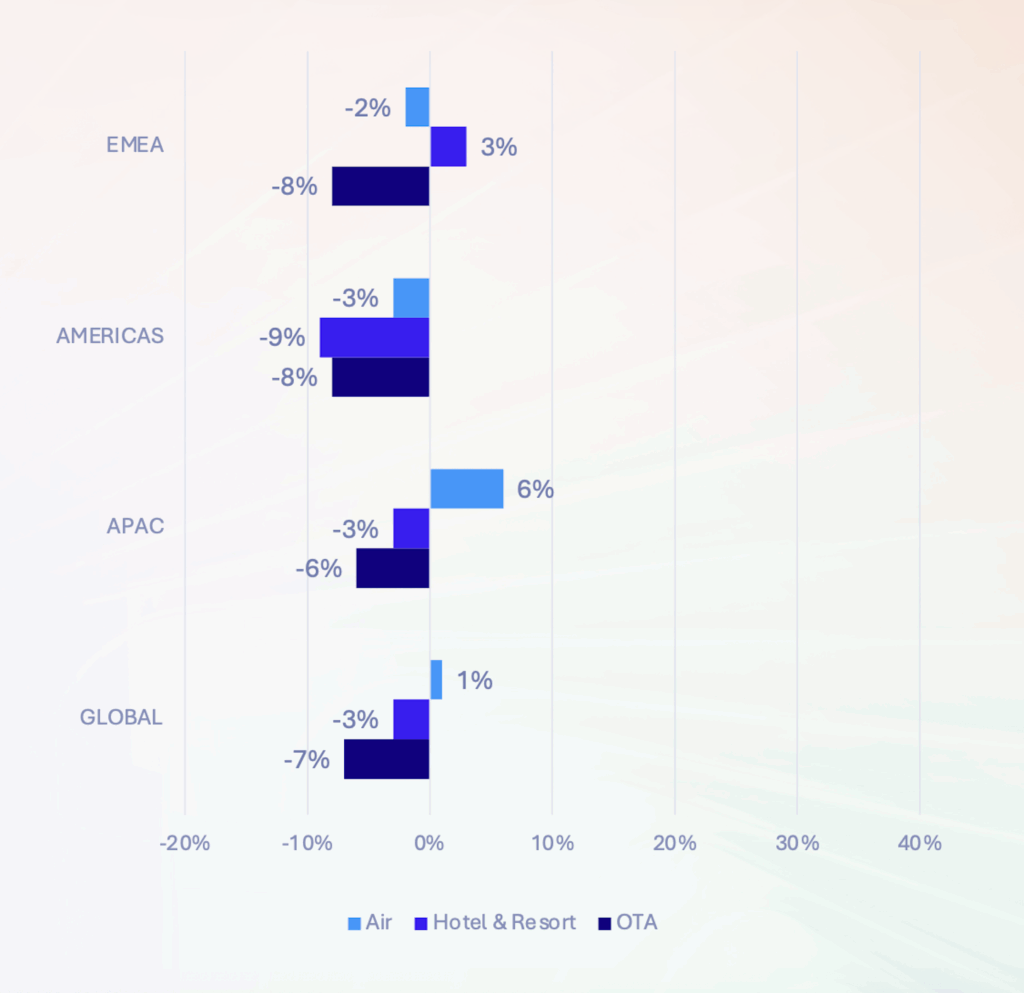
Even as more travelers enter the funnel, conversion rates are declining across most travel categories, with OTAs seeing the steepest drops globally. At a regional level, the biggest declines vary: OTAs fell by 8% in EMEA and 6% in APAC, while hotels and resorts saw the sharpest drop in the Americas at 9%.
Online Conversion Rate by Region, Year Over Year
Takeaway for marketers: Prioritize high-intent travelers in a volatile market. Use smarter targeting and full-funnel strategies to close the gap between traffic and bookings, and adapt your approach to regional demand patterns.
Travelers are more deliberate and harder to win
On average, travelers now browse 25 hotel listings before committing. At the same time, 42% say they enjoy extended browsing when planning trips, taking time to evaluate options across multiple providers and channels.
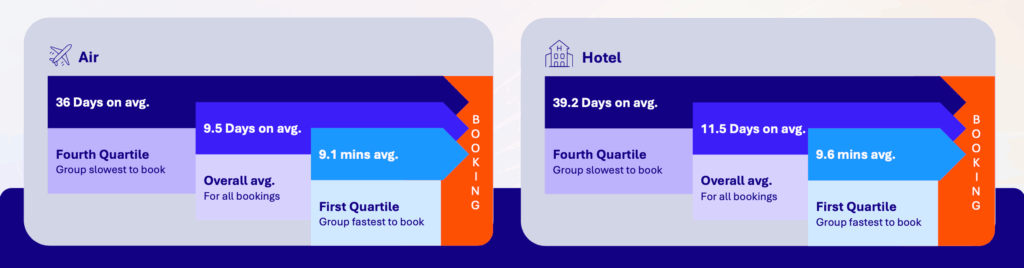
Even when decisions happen quickly, the path to get there isn’t simple. Booking windows average 9.5 days for flights and 11.5 days for hotels, but timelines vary widely from just minutes to over a month.
Air and Hotel: Path to Booking Duration — Mar 2026
Takeaway for marketers: Plan for more variable journeys and show up where travelers compare. Use always-on, cross-channel strategies to stay visible across fragmented decision timelines and influence choices at every touchpoint.
Rising costs are shaping how travelers book
Economic pressure is real, but it’s not stopping people from booking trips. Travel remains a priority across generations, even as rising costs influence how people plan. Rather than opting out, travelers are becoming more selective, adjusting their behavior to make trips work.
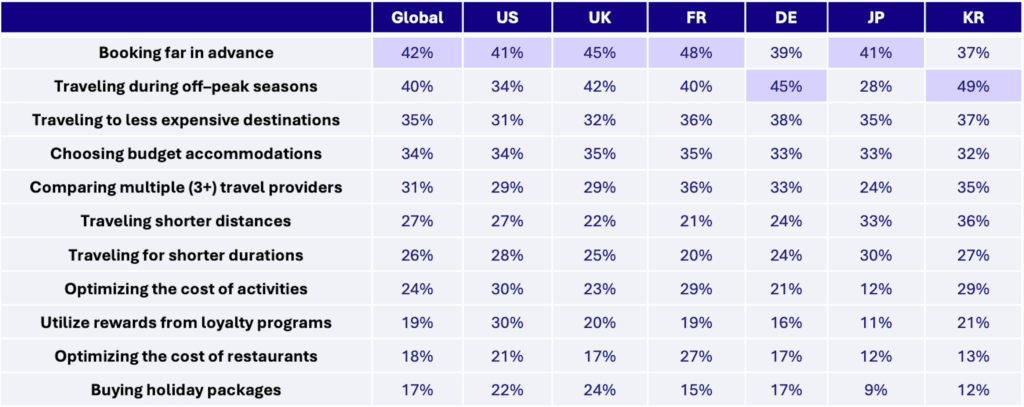
The most common strategies include booking earlier (42%), traveling during off-peak periods (40%), and choosing more affordable destinations (35%).
Travel Cost Optimization Behaviors
Even among those who don’t consider travel essential, 38% are still planning trips, showing that demand extends beyond core, high-intent audiences.
Takeaway for marketers: Personalize messaging and clearly communicate value. Highlight flexibility, pricing transparency, and smart trade-offs to engage more selective travelers and convert demand across different budget mindsets.
AI is influencing decisions from discovery to booking
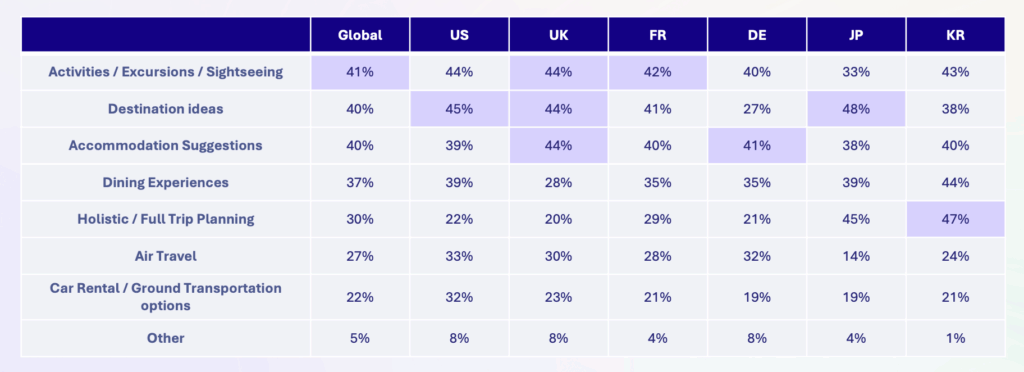
Today, 40% of travelers use AI to explore destinations and 41% use it to plan activities, making it a key entry point in the travel journey.
From there, AI’s role expands into more complex decisions. Nearly 30% of travelers now use AI for full trip planning, signaling growing confidence in AI to support end-to-end travel decisions.
AI Usage Across Travel Planning Stages
That influence is also translating into measurable outcomes. In March 2026, ChatGPT drove a higher share of product page landings than search (+13 percentage points). More importantly, that engagement is converting: 72% of Criteo travel clients recorded at least one booking influenced by ChatGPT.
Takeaway for marketers: Make AI part of your cross-channel strategy. Ensure consistent presence across AI, search, social, and the open web to capture and convert traveler intent.
High-value travelers are shifting how they spend
This summer, higher-value opportunities are emerging in new places. In the US, demand for cooler destinations rises during peak summer months, with travelers 17% more likely to choose colder cities over warmer alternatives. These trips also come at a premium, with airfares averaging 16% higher on comparable routes.
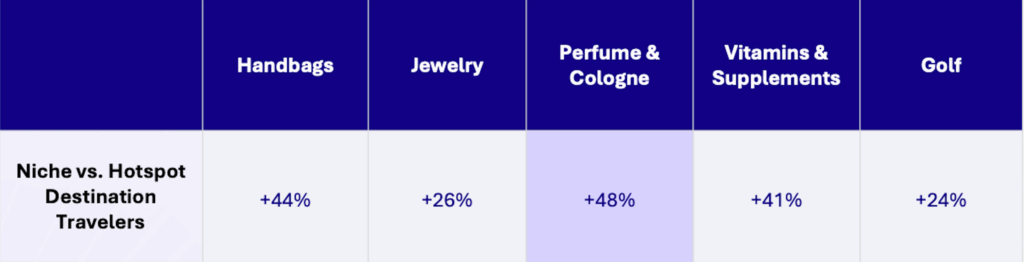
At the same time, niche destinations are attracting higher-value travelers who spend 1.6x more and travel 1.7x farther than those choosing mainstream locations. These travelers also have significantly higher purchase intent across premium retail categories, including fragrance (+48%), handbags (+44%), and vitamins and supplements (+41%).
Retail Purchase Likelihood: Niche Destination Travelers
Takeaway for marketers: Prioritize high-value segments and maximize revenue per trip. Use data to identify premium audiences and drive growth through upsell, bundling, and cross-category activation.
Complexity is growing, but so is the opportunity
As the path to booking becomes more fragmented, those who can identify intent, stay present across channels, and adapt to shifting traveler behaviors will be best positioned to win.
Read the full Spring/Summer 2026 Travel Pulse report to uncover where demand is growing and how to turn traveler intent into results.